If you are thinking about buying a UCA property in Malta, 2026 is a strong time to understand exactly how these homes work before making a move.
Urban Conservation Area properties are getting more attention from buyers who want something increasingly hard to find in Malta’s property market: character, scarcity, and the possibility of meaningful tax and restoration incentives. In the right situation, a UCA property can offer real long-term value. But buyers need to be careful. These homes are not automatically cheaper, not automatically easier to buy, and definitely not always the better option for every purchaser.
At Lea Properties, the smarter way to look at UCA property is this: the opportunity can be excellent, but only when the property, the incentives, and the buyer’s expectations all line up.
What Is a UCA Property in Malta?
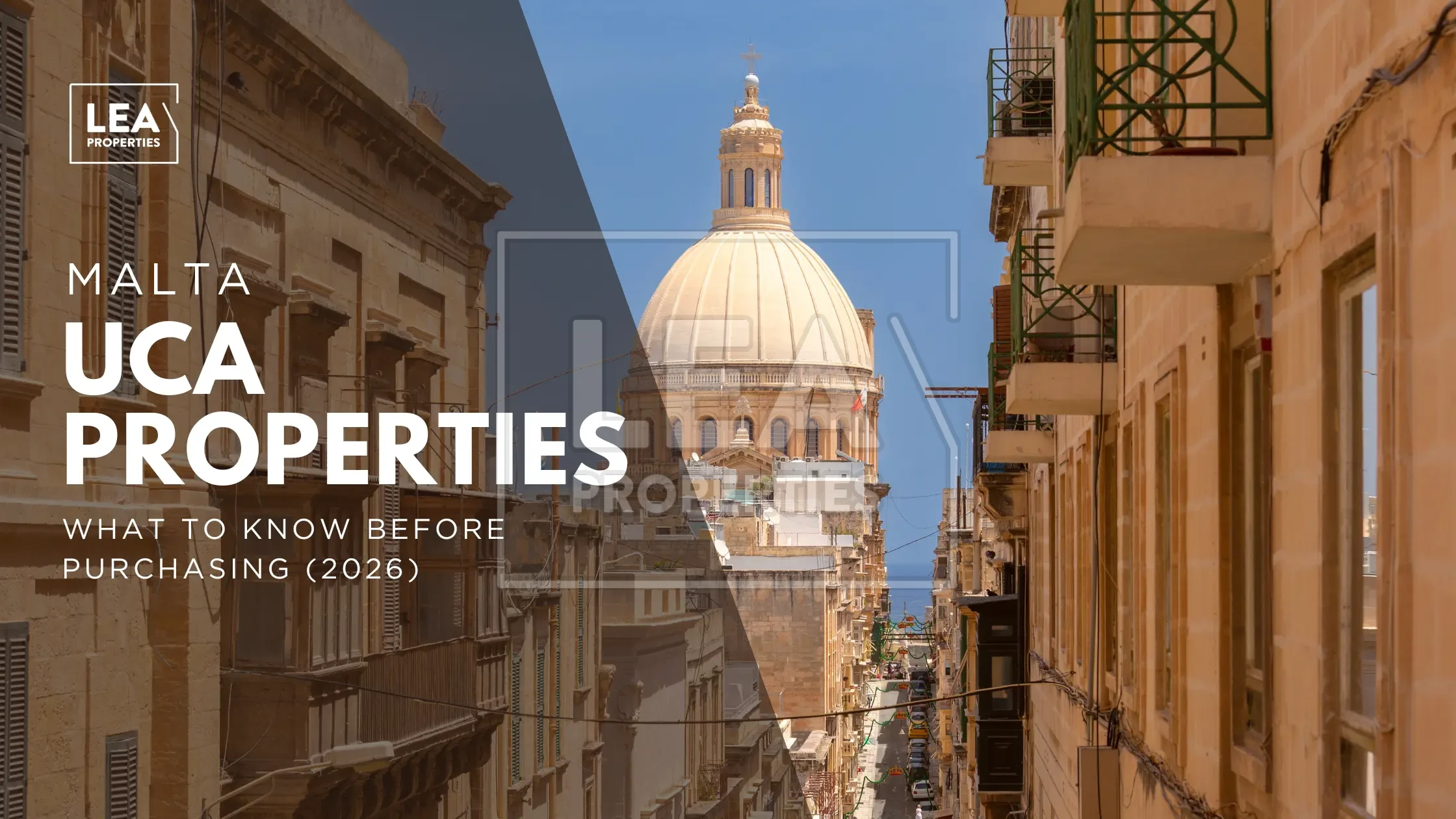
A UCA property is a property located within an officially designated Urban Conservation Area. These zones are intended to protect the architectural and historic character of Malta’s towns and villages, which is why many UCA homes include features such as traditional facades, stone staircases, internal courtyards, timber balconies, high ceilings, and layouts that reflect older Maltese building styles.
The source material also notes that qualifying incentives may extend beyond classic UCA homes in some situations, including properties built more than 20 years ago and vacant for over seven years, as well as new builds designed in traditional Maltese style. That is why buyers should never assume qualification based purely on appearance or age. The legal status and official designation matter.
Are UCA Properties in Malta Usually Cheaper?
This is where buyers often get misled.
The short answer is: not necessarily.
Some UCA properties can be priced lower than comparable non-UCA sites because they are less attractive to developers. If a site cannot be demolished and rebuilt into multiple modern units, that can reduce speculative development value. In that sense, certain UCA houses may look more affordable than non-UCA properties in redevelopment-heavy areas.
But that is only part of the picture.
Well-located townhouses and houses of character in UCA areas can also command strong prices, especially when they have outdoor space, good proportions, usable layouts, or have already been restored properly. Limited supply pushes those values up. A great UCA home is not usually discounted just because it sits inside a conservation area. In many cases, the opposite is true.
The more accurate way to think about it is this: some UCA properties may be better value to buy, but they are not automatically cheap to own. Buyers have to consider restoration costs, permits, delays, structural issues, and fit-out expenses alongside the asking price. (Source: HousingAuthority)

Image source: Investropa
Why UCA Homes Are Getting More Attention in 2026
Based on the 2026 guidance reviewed, qualification may apply where the property is located in an officially designated Urban Conservation Area, where it is more than 20 years old and has been vacant for over seven years, or where it is a new build that conforms to traditional Maltese architecture, subject to the relevant scheme conditions and deed timing requirements.
That is a major reason buyers are giving UCA property serious attention. On paper, these incentives can make a traditional townhouse or older home far more attractive than many people first assume.
There is additional support for qualifying first-time buyers, including official gant support for deeds signed within the current qualifying period and an additional first-time buyer grant structure tied to qualifying mortgage-backed purchases.
What Financial Benefits Buyers Should Understand
The biggest benefit is usually stamp duty relief.
Qualifying UCA properties may benefit from a full exemption on the first €750,000. Given that standard buyer stamp duty in Malta is generally 5% of the property value, this can represent substantial savings for the right purchase. The standard payment structure of 1% at Promise of Sale and the remaining 4% at final deed, where applicable.
The next major benefit when it comes to reviewing the costs of real estate, is the VAT refund on restoration. Restoration-related expenses may qualify for an 18% VAT refund on the first €300,000 spent. Eligible works may include labour, materials, plastering, tiling, plumbing, electrical work, windows, doors, architect fees, and planning permits.
For first-time buyers, there are additional grants that can further improve the economics of a qualifying purchase.
| Incentive | Non-First-Time Buyer Eligible? | Notes |
|---|---|---|
| UCA Stamp Duty/Tax Relief | Yes | On first €750000 |
| VAT Refund on Works | Yes | Must be residence |
| First-Time Buyer Grant | No | Restricted to first-time |
What Qualifies as an Eligible UCA or Heritage-Type Purchase?
This part matters more than buyers think.
Qualification may apply where the property is located in an officially designated Urban Conservation Area, where it is more than 20 years old and has been vacant for over seven years, or where it is a new build that conforms to traditional Maltese architecture. The deed must also fall within the qualifying timeframe.
Just as important, buyers should obtain a UCA Declaration Letter from the Malta Planning Authority before purchase. That should be treated as essential, not optional. Without proper confirmation, buyers risk basing a large financial decision on assumptions rather than verified eligibility.
The Restrictions Buyers Need to Understand
This is where many UCA purchases become more complicated than expected.
Qualifying properties cannot be divided or subdivided in a way that changes the number of residential units. It also notes that the property must be used as a primary private residence, that buyers cannot apply for other restoration grants on the same property for five years, and that unauthorized works may disqualify the property.
The Reality of Buying and Restoring a UCA Property
This is the gap many articles fail to explain.
Buying a UCA property can take longer. Restoration can take longer. Permits can take longer. In practice, these homes often involve more paperwork, more planning scrutiny, more manual restoration work, and sometimes more complexity from the seller side as well.
That is especially true when older properties do not have updated plans, when sanctioning is needed, or when access, façades, garages, structural alterations, or heritage-sensitive changes are involved. In other words, the financial benefits may be strong, but the process is rarely as straightforward as buying a finished apartment from a developer.
That does not make UCA property a bad choice. It simply means buyers should approach it with patience, realistic timelines, and a healthy budget for the unexpected.
What Makes One UCA Property Worth More Than Another?
Not all UCA homes are equal.
In Malta, value can swing dramatically based on details such as outdoor space, garage potential, parking access, usable room layout, natural light, façade condition, restoration quality, and whether the property has already been regularised properly. A poorly shaped or awkward home with no parking and major restoration needs may be priced lower, but for good reason. A rare, well-proportioned townhouse in a desirable area with outdoor space and strong original features may command a premium.
This is exactly why buyers should avoid broad assumptions such as “UCA homes are cheaper” or “UCA homes are always a bargain.” Some are excellent opportunities. Some are overpriced. Some are restoration-heavy projects that only make sense for a specific type of buyer.
Where to Find UCA Properties in Malta
UCA locations across Malta and Gozo. In South Malta, the listed areas include Birżebbuġa, Birgu, Bormla, Għaxaq, Gudja, Isla, Kalkara, Luqa, Marsa, Marsascala, Paola, Tarxien, Qormi, Żabbar, Żejtun, and Żurrieq. It also identifies a broad range of qualifying UCA locations in North Malta, Central Malta, and Gozo.
For buyers focused on South Malta, these areas are especially worth watching because many still offer authentic Maltese housing stock, stronger local character, and in some cases better comparative value than Malta’s most saturated residential zones.
Budgeting Properly For a UCA Property
Even when a property qualifies for incentives, buyers still need to budget properly.
The listing price is only one part of the transaction. Buyers may still need to pay notary fees of roughly 1% to 3% of the purchase price, architect survey costs of around €500 to €1,000, bank-related costs if financing is involved, and AIP permit fees in cases where these apply.
And then there is the restoration itself.
Even with VAT refunds available, the works still need to be funded, managed, documented, and completed correctly. A grant does not eliminate cash flow requirements, contractor risk, or project management pressure. It simply improves the economics when the project is handled well.
Are UCA Properties Good for First-Time Buyers?
They can be, but not for everyone.
For a patient first-time buyer who wants character and is prepared for a more involved process, a UCA property can be a very smart long-term move. The available incentives may significantly improve affordability compared with what many buyers assume at first glance.
But if the buyer needs speed, predictability, minimal renovation, and a smoother transaction, a UCA purchase may not be the right fit. These properties tend to reward patience, planning, and realistic expectations.
What Buyers Should Check Before Purchasing a UCA Property
Before committing to any UCA home, buyers should ask:
- Is the property officially confirmed as qualifying?
- Has the UCA Declaration Letter been obtained?
- Are there any unauthorized works or planning issues?
- Will the intended use comply with grant or exemption conditions?
- Are restoration costs realistic for the property’s condition?
- Does the layout, access, and parking situation support long-term value?
- Is the asking price based on real value, or on assumptions tied to the UCA label?
Those questions matter because UCA status alone does not make a property good. It just creates a framework that may make the right property more attractive.
Final Thoughts
Malta UCA properties can offer real advantages in 2026, especially for buyers who want traditional character, limited-supply housing stock, and access to meaningful tax and restoration incentives. But the category needs to be approached with clear eyes.
Some UCA homes are better value because they are less attractive to developers. Some are more expensive because they are rare and highly desirable. Some look affordable until you factor in the restoration, permits, delays, and compliance work. That is the real answer.
The smartest buyers do not buy a UCA property because it sounds like a deal. They buy because the property itself is right, the numbers make sense, and the restrictions are fully understood from the start.
If you are exploring UCA properties in South Malta or elsewhere across the island, Lea Properties can help you assess the opportunity properly and move forward with more confidence.